Key takeaways
- Price the whole trip first, including the costs people forget, then add a 10 percent cushion.
- Your monthly target is the trip total divided by the months until you pay, not until you leave.
- Keep vacation money in its own goal, apart from your emergency fund.
- If the monthly number doesn't fit, change the trip or the date, not the plan to pay cash.
A vacation should be something you look forward to before you go and feel good about after you get back. The second part is where many trips go wrong. The flights and hotel go on a card, the card balance lingers into spring, and the trip keeps costing money long after the tan fades.
Carrying a card balance is common. In the Federal Reserve’s survey for 2025, 45 percent of credit card owners said they had carried a balance at least once in the prior 12 months.1 A trip paid in cash, saved ahead, is one of the easiest ways to stay out of that group, and it tends to feel better too.
The method is simple: price the trip, divide by the months you have, and put the money somewhere it won’t get spent on something else. Here’s how to do each step well.
Step 1: Price the whole trip
Most vacation budgets go over because they only count the big-ticket items. Write down everything, even the rough guesses:
- Getting there. Flights, train, or gas and tolls for a road trip. Bags and seat fees.
- Staying there. Hotel or rental, including taxes and cleaning or resort fees.
- Getting around. Rental car, parking, transit passes, rides to and from the airport.
- Eating. A daily food amount per person times the number of days.
- Doing things. Tickets, tours, entry fees, equipment rentals.
- Before you go. Luggage, a passport renewal, travel insurance, a pet sitter, vaccinations.
- While you’re away at home. Bills that don’t stop just because you’re gone. They’re already in your budget, but make sure the trip doesn’t borrow from them.
- Souvenirs and small spending. Easy to forget and easy to overspend.
Then add a cushion of about 10 percent. Something always costs more than the listing suggested.
Example: A week-long trip for two.
| Item | Estimate |
|---|---|
| Flights (2 people, with bags) | $900 |
| Hotel, 6 nights with taxes and fees | $1,080 |
| Food, $90 a day for 7 days | $630 |
| Activities and tickets | $250 |
| Airport parking and local transport | $180 |
| Souvenirs and small spending | $150 |
| Subtotal | $3,190 |
| Cushion, about 10 percent | $310 |
| Trip goal | $3,500 |
These figures are an illustration. Your destination and style of travel will change them a lot.
Step 2: Turn the total into a monthly number
Now divide the goal by the number of months you have. The key detail: count the months until you have to pay, not until you leave. Flights and hotels are often paid months before departure.
Monthly amount = trip goal ÷ months until payment
Here is how the same $3,500 trip looks on different timelines:
| Months to save | Monthly amount | Per biweekly paycheck (about) |
|---|---|---|
| 4 | $875 | $404 |
| 6 | $583 | $269 |
| 9 | $389 | $180 |
| 12 | $292 | $135 |
| 18 | $194 | $90 |
The per-paycheck column assumes 26 paychecks a year, so a monthly amount times 12 divided by 26.
If you need to pay a $1,200 deposit in three months and the rest before you leave in nine, plan for both: $400 a month for the first three months covers the deposit, then the remaining $2,300 over the last six months is about $383 a month.
Step 3: Check that the number fits
A monthly savings amount only works if your budget can carry it without borrowing from rent or groceries. Look at what’s left after your bills and everyday spending. If the trip’s monthly number is bigger than that, you have four honest options:
- Push the date back. Three more months can cut the monthly amount by a quarter or more.
- Change the trip. Fewer nights, a closer destination, or a cheaper season.
- Free up money elsewhere for a while. Pause a want or two until the trip is funded.
- Pay for part of it in cash and skip part of the plan. Book the flights and hotel with saved money and keep the activity list flexible.
What you avoid is the fifth option, “we’ll put the rest on the card and figure it out later.” That’s the one that turns a week away into months of payments.
If you’re not sure what you can spare each month, how to make a budget walks through finding that number from your real spending.
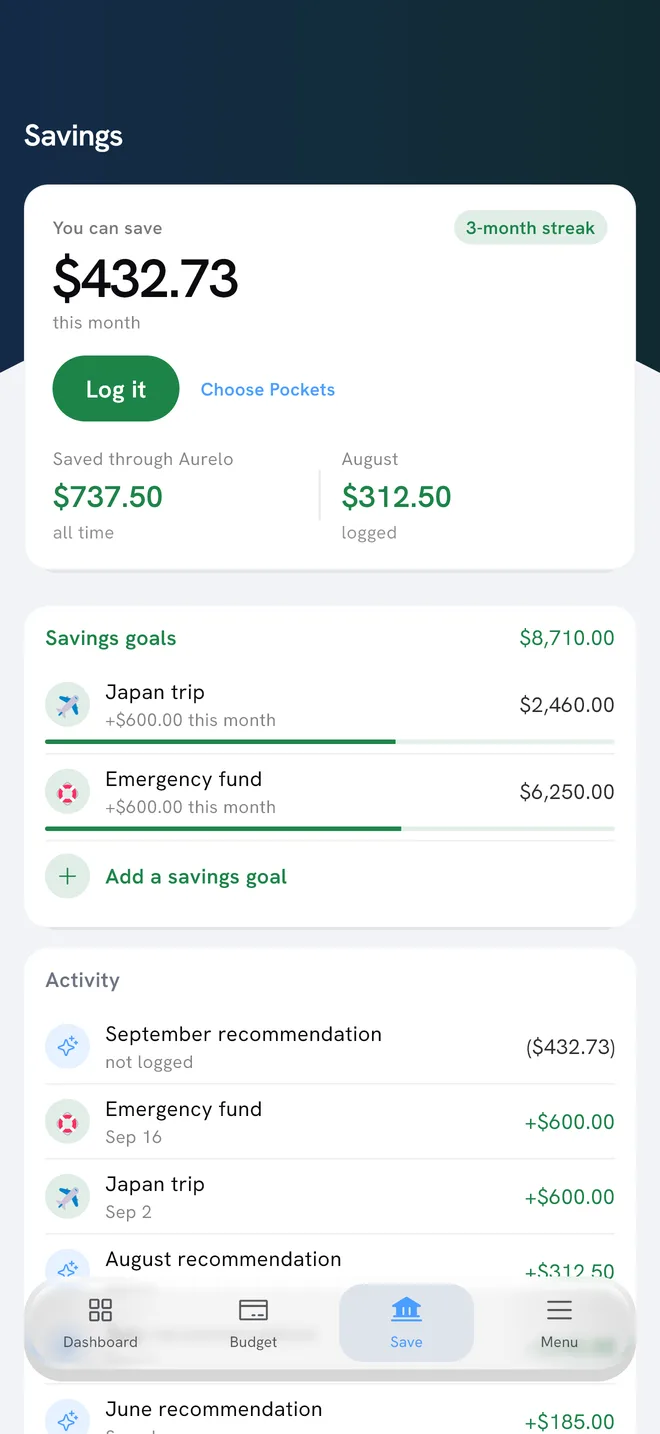
In Aurelo: The Save tab shows “You can save $X this month,” which is what’s left after your pockets and the bills still ahead. It’s a quick reality check before you commit to a trip’s monthly number.
Step 4: Give the trip its own place
Money that sits in your everyday checking account tends to get spent on everyday things. Give the vacation money a separate home:
- A separate savings account, or a named sub-account if your bank offers them. Name it after the trip.
- Automatic transfers on payday, set up in your own bank, so saving happens before spending does.
- Keep it apart from your emergency fund. An emergency fund is for things you can’t plan. A vacation is something you can. If the two share an account, one surprise bill can quietly cancel the trip, or the trip can leave you with no cushion. In the Federal Reserve’s survey for 2025, 55 percent of adults said they had set aside enough emergency savings to cover three months of expenses.2 If you aren’t there yet, it’s worth building a starter cushion alongside the trip fund. See how big your emergency fund should be.
This is the same idea as a sinking fund: set aside a little each month for a cost you know is coming. Sinking funds for annual expenses covers the method in more detail.
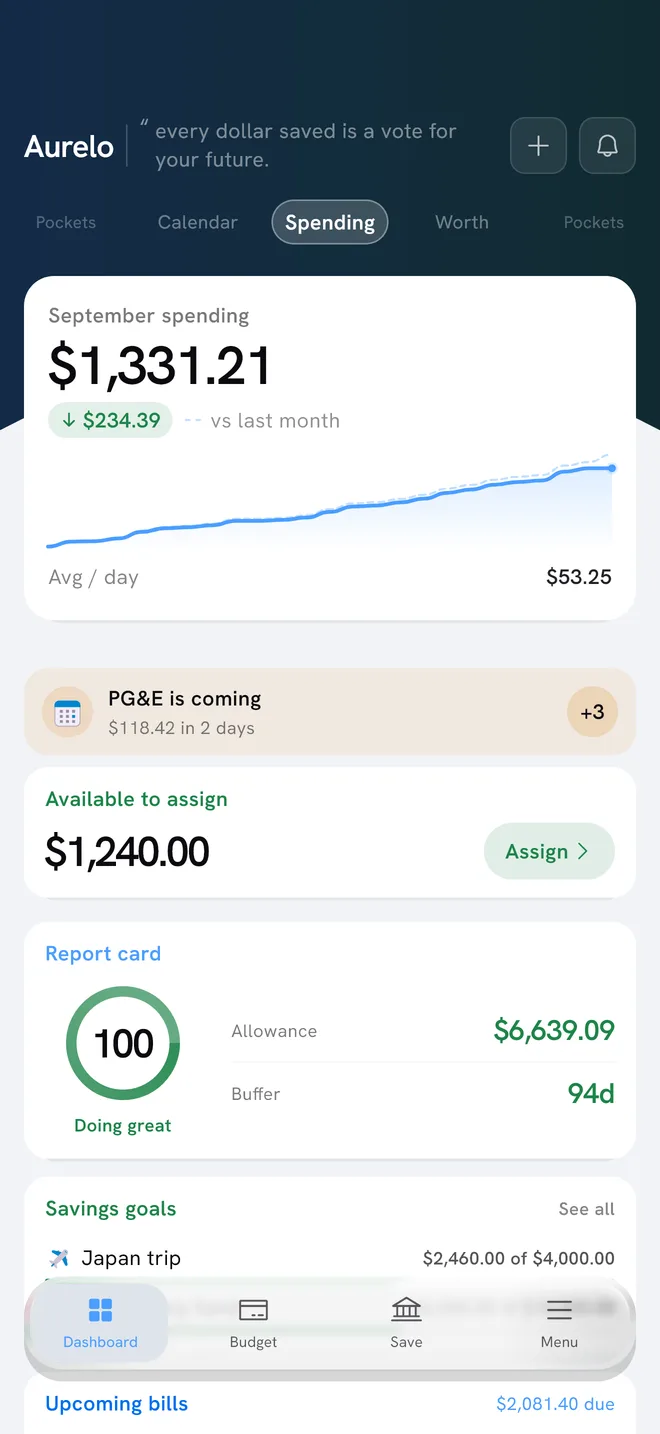
In Aurelo: Create a savings goal such as “Japan trip” with a target amount. When you move money to savings in your own bank, tap Log it and Aurelo adds it to the goal, so you can watch progress toward the target. Aurelo tracks it; it never moves or holds the money for you.
Step 5: Spend the trip money on the trip
Once you’re away, the budget still helps:
- Set a daily spending amount from your food, activity and small-spending lines. $1,030 across seven days is about $147 a day for two.
- Check once a day. A quick look each evening keeps a pricey dinner from quietly eating tomorrow’s museum tickets.
- If you go over, move money within the trip, not from home. Skip one paid activity to cover a nicer meal.
If you do use a credit card for the trip, for convenience or protection, pay the statement in full from the saved money when it arrives. The card is then just a way to pay, not a way to borrow. How to budget when you pay with credit cards explains how to keep card spending tied to money you already have.
After you get home
Two small habits make the next trip easier:
- Compare what you spent to what you planned. Which lines ran over? Next time, the estimate will be closer.
- Keep the goal going. Even $50 a month into a travel goal after you return means the next trip starts partly funded.
The short version
- Price every part of the trip and add about 10 percent.
- Divide by the months until you pay.
- Make sure that monthly number fits your budget, or change the trip until it does.
- Save in a separate goal, away from your emergency fund.
- Use a card only for money you’ve already saved, and pay it in full.
A trip paid for before you leave is a trip you only pay for once.
In Aurelo: Aurelo is a budgeting app for iPhone, free during its open beta. Connect your accounts read-only or log spending by hand, see what you can save each month on the Save tab, and track trip goals alongside your emergency fund. The Free plan includes up to three savings goals.
Common questions
How much should I save each month for a vacation?
Take the full trip cost, add a small cushion, and divide by the number of months until you need to pay. A $3,000 trip booked eight months out works out to $375 a month. If that's more than your budget can carry, push the trip back or trim the plan until the monthly amount fits.
Is it bad to put a vacation on a credit card?
Using a card for the booking is fine if the money is already saved and you pay the statement in full. The trouble starts when the card is the plan, because a balance carried for months adds interest on top of the trip.
Should I use my emergency fund for a vacation?
It's better not to. An emergency fund is for things you can't schedule, and a vacation is something you can. Save for the trip separately so a surprise bill after you get home doesn't find the cushion empty.
How far in advance should I start saving for a trip?
As early as you can name the trip. More months means a smaller monthly amount. Many people start six to twelve months ahead for a bigger trip, and some keep a small travel goal running all year so the next one is partly funded already.
Sources
- Economic Well-Being of U.S. Households in 2025: Credit , Federal Reserve Board, 2026
- Economic Well-Being of U.S. Households in 2025: Savings and Investments , Federal Reserve Board, 2026
Written by the Aurelo team. We build Aurelo, a budgeting app that reads your accounts read-only and never moves your money. Every claim about the app is checked against the app itself, and every figure links to its source. This is general education, not financial, tax or legal advice.