Key takeaways
- Most budgets fail from design problems, like guessed numbers and forgotten yearly bills, not a lack of willpower.
- Know what you can spend today before you buy, not what your bank balance says.
- An overspend is normal: cover it from another line in the same month and keep going.
- Cut the upkeep to a few minutes a day, and plan shared costs with your partner, not for them.
If your budget keeps failing, you’re in good company. Money stress is common: in the Federal Reserve’s 2025 survey of household finances, only 41 percent of adults said they always or often had money left over at the end of the month.1 Plenty of people have started a budget on the first of the month and quietly stopped by the fifteenth. The usual conclusion is “I’m just bad at this.” That’s almost never the real reason.
Most budgets fail for a handful of predictable, fixable reasons, and very few of them are about willpower. Here are the common ones, and what to do about each.
1. The numbers were guesses
This is one of the most common causes. When you sit down to make a budget, it’s natural to write the numbers you’d like to spend: $300 for groceries, $100 for eating out. But if you’ve actually been spending $520 and $240, the plan was broken before the month started. You didn’t fail the budget. The budget failed to describe your life.
The fix: Build your first plan from what you actually spent over the last few months. Pull your statements and total each area. Start with the real numbers, then decide where you’d like to trim. A plan that begins close to reality is one you can gradually steer; a plan that begins far from it collapses in the first week. How to make a budget walks through this step by step.
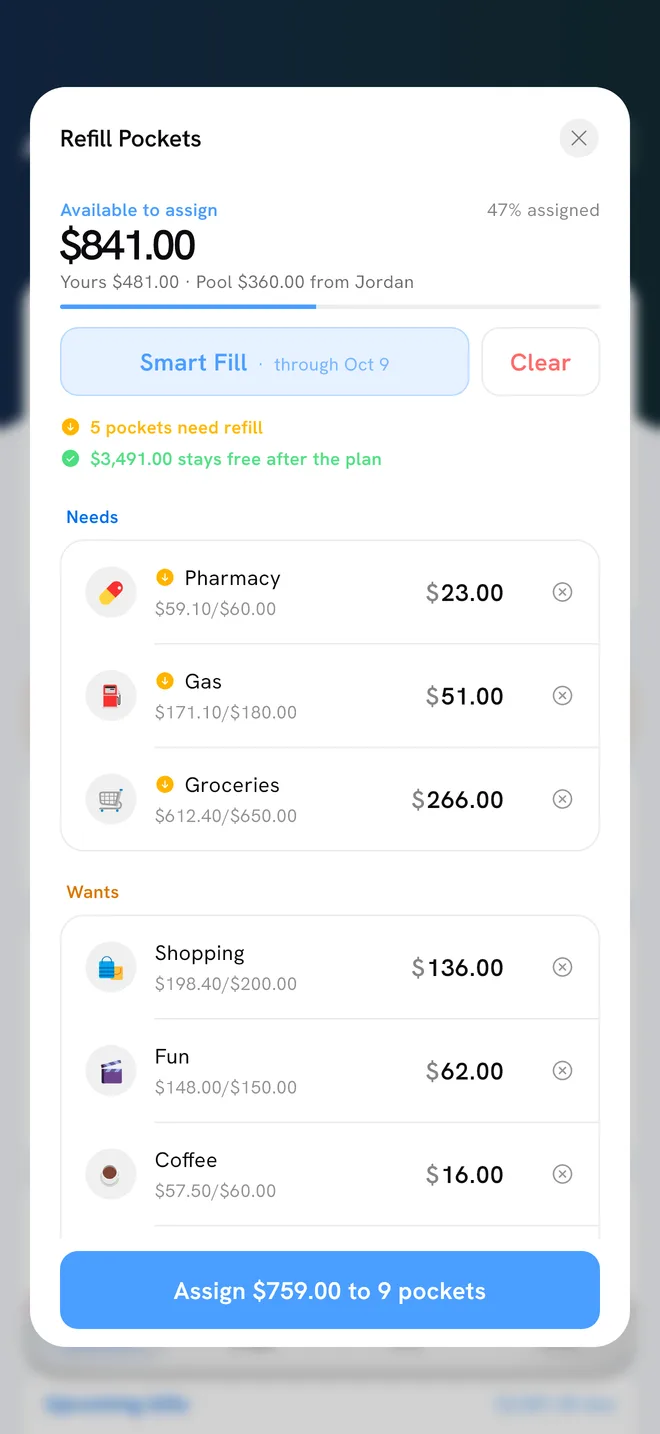
In Aurelo: Aurelo builds your starting budget from your last six months of real transactions, so the first draft already looks like how you spend. You adjust from there instead of guessing.
2. Irregular and yearly bills ambushed the month
Your monthly budget looks fine until the car insurance renews, the annual membership charges, or the holidays arrive. These costs aren’t surprises exactly; you knew about them. They just don’t show up every month, so they’re easy to leave out. When one lands, it blows through the month and makes the whole plan feel pointless.
The fix: List everything you pay less often than monthly. Total it for the year, divide by twelve, and set that amount aside every month. When the bill comes, the money is already waiting. This is often called a sinking fund, and it’s covered in detail in sinking funds for annual expenses.
In Aurelo: Annual Pockets hold yearly bills like insurance, a membership or a card’s annual fee. You set aside a bit each month, and the bill is covered when it comes.
3. You couldn’t answer “can I afford this today?”
A monthly budget is a good plan and a poor in-the-moment guide. Standing in a store, you don’t want to add up six lines and subtract the rent due next week. So you check your bank balance instead. The balance says $900, which feels like plenty, but $700 of it is already promised to bills before payday. The budget was fine. The information at the moment of decision wasn’t.
The fix: Before a purchase, work out one number: your checking balance, minus the bills due before your next payday, minus what your remaining budget lines still need for the month. That’s what’s actually free to spend. If that’s too much math to do on the spot, it’s a strong reason to use a tool that does it for you. How to stop overspending has more ways to catch a purchase before it happens.
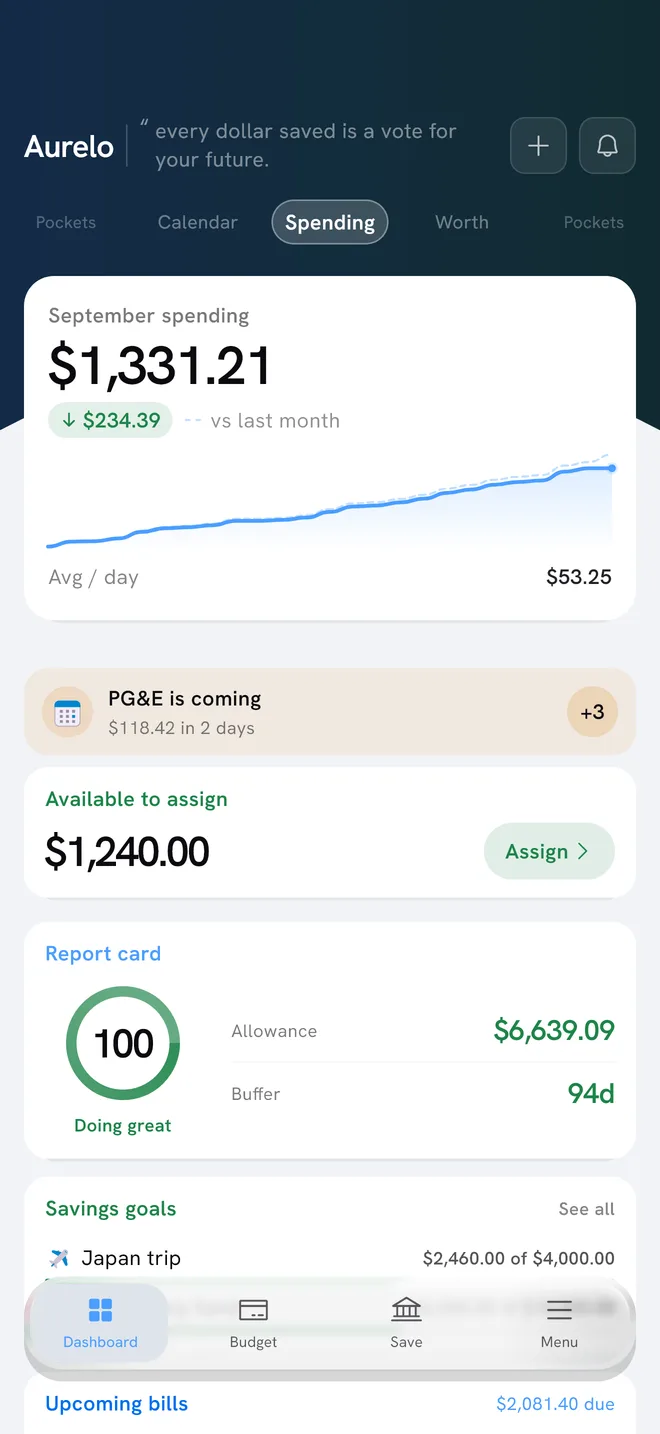
In Aurelo: Today’s Allowance is that number. It takes your checking balance, subtracts the bills due before your next payday and what your pockets still need, and shows what’s left for today. If it goes negative, it turns red and offers a Reshuffle.
4. One overspend turned into giving up
This is the all-or-nothing trap. You go over on eating out by $60 in the second week, feel like the budget is ruined, and stop tracking. The rest of the month runs unplanned, and next month starts with that same sense of failure.
Overspending one line is normal. It’s going to happen, especially in the first few months. What matters is what you do next.
The fix: When a line runs over, cover it from another line in the same month. Took $60 extra on eating out? Move $60 from shopping or entertainment. The total stays the same, and you’ve made a decision instead of an excuse. A budget that bends is a budget that survives. At the end of the month, if the same line keeps running over, raise it and lower something else.
5. It took too much manual work
Plenty of budgets die of paperwork. Typing every coffee into a spreadsheet, reconciling receipts, sorting transactions on a Sunday night. It works for a while, then life gets busy, you fall two weeks behind, and catching up feels impossible.
The fix: Cut the work down to what actually matters. Some options:
- Connect your accounts to an app with a read-only connection so transactions arrive on their own.
- If you log by hand, log daily in under a minute rather than weekly in half an hour.
- Keep fewer lines. Ten to fifteen is enough for most households.
- When you’ve fallen behind, don’t try to reconstruct every purchase. Start fresh from today’s balances and move on.
How to track your spending compares a few low-effort ways to do it.
6. One person was doing it alone
If you share money with a partner but only one of you is running the budget, it’s likely to fail. One person sets the plan; the other spends without seeing it. The planner ends up feeling like the enforcer, and the spender feels policed. Neither is a good long-term arrangement.
The fix: Agree on a shared plan for shared costs, like rent, groceries and utilities, and let each person keep some personal spending that’s theirs alone. Both people should be able to see the shared plan at any time, not just hear about it. How to budget as a couple covers ways to do this without merging every account.
Aurelo lets you share a budget with one other person on the Free plan. Each of you chooses which of your own accounts feed it, and accounts you don’t link stay private.
A few more quiet budget killers
- No room for fun. A budget with zero discretionary money rarely lasts. A small line for things you enjoy is part of a plan that holds.
- Forgetting credit cards. Spending on a card feels free until the statement arrives. Count card purchases against your budget when you make them. In the Fed’s 2025 survey, 45 percent of credit card owners had carried a balance at least once in the prior 12 months.2 See budgeting with credit cards.
- No cushion. Without any savings, every surprise becomes an emergency. In the same survey, 63 percent of adults said they would cover a $400 emergency expense with cash or its equivalent, so for the other 37 percent, a modest surprise means finding some other way to pay, or not being able to.3 Even a small buffer changes how a bad week feels.
Starting again
If your last budget fell apart, you don’t need a new level of discipline. You need a better plan: real numbers, room for yearly bills, a daily answer to “can I afford this,” and permission to adjust when a line runs over.
Start with this month. Don’t try to fix the past. Pull the last few months of spending, set honest numbers, and check in once a week. If you’d like help with the setup, Aurelo is free during its open beta on iPhone and can build your first budget from your real spending in about a minute.
Common questions
Why can't I stick to a budget?
Usually because the plan was built on guesses, left out irregular bills, or gave no way to recover from an overspend. Those are design problems, and each has a fix. Rebuilding the numbers from your real spending is the best place to start.
What should I do when I go over budget?
Cover the overspend from another line in the same month, then carry on. Moving $50 from eating out to groceries keeps the plan honest. Abandoning the whole budget because one line went over is the bigger problem.
Is it normal to struggle with budgeting?
Yes. Money stress is common, and first budgets usually need several rounds of adjustment. Struggling usually means the plan needs changing, not that you're bad with money.
How do I stop overspending when my budget keeps failing?
Make it easy to know what you can spend today, before you buy. A single daily number that accounts for upcoming bills is easier to act on than a monthly spreadsheet you check after the fact.
Sources
- Economic Well-Being of U.S. Households in 2025: Income and Expenses , Federal Reserve Board, 2026
- Economic Well-Being of U.S. Households in 2025: Credit , Federal Reserve Board, 2026
- Economic Well-Being of U.S. Households in 2025: Savings and Investments , Federal Reserve Board, 2026
Written by the Aurelo team. We build Aurelo, a budgeting app that reads your accounts read-only and never moves your money. Every claim about the app is checked against the app itself, and every figure links to its source. This is general education, not financial, tax or legal advice.