Key takeaways
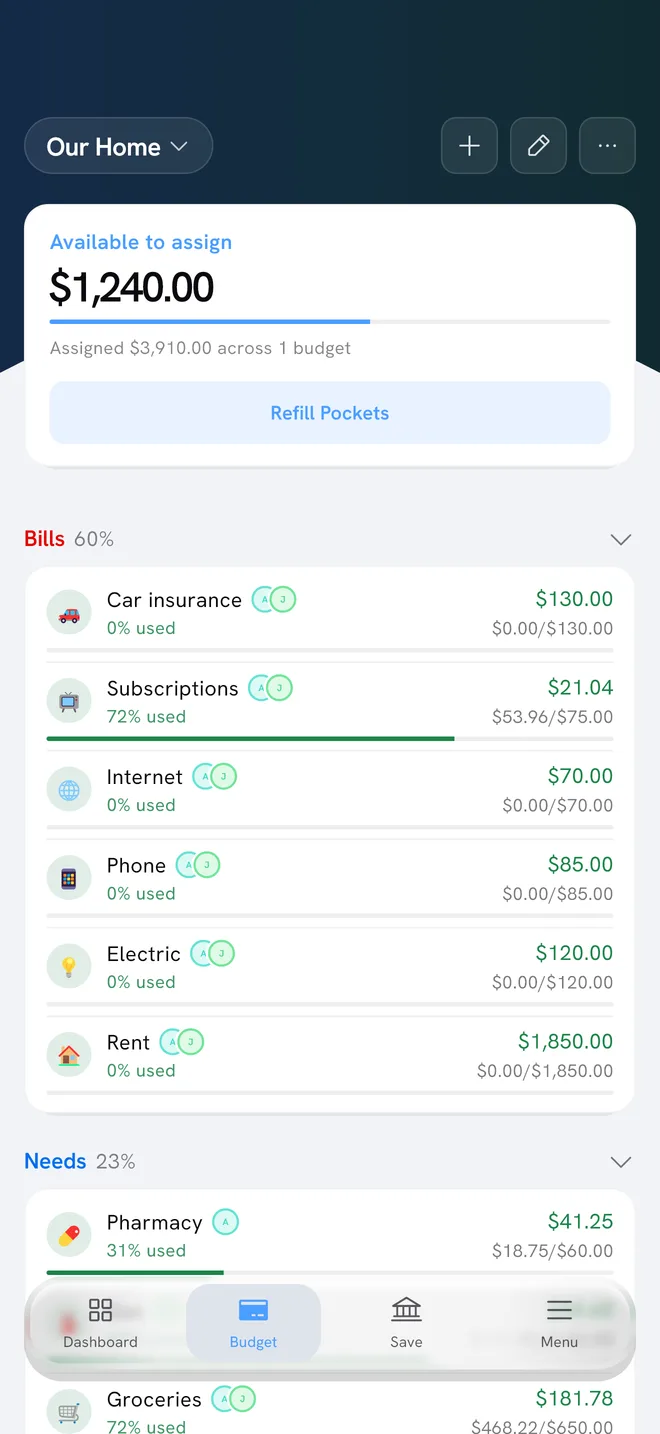
- Group budget categories into Bills, Needs, Wants, Yearly, Savings and Debt so priorities are clear at a glance.
- Most people do well with 12 to 20 categories; fewer is easier to keep up with.
- Housing, transportation and food take the largest shares of the typical U.S. household budget.
- Give irregular yearly costs their own categories so they stop surprising you.
Every budget starts with the same question: what are the categories? Get the list right and the rest of the budget gets easier, because every purchase has an obvious home. Get it wrong and you end up with a “miscellaneous” line that quietly swallows more than it should.
Below is a complete budget categories list to start from, grouped the way it helps to think about money: what must be paid, what you need, what you want, what comes once a year, what you are saving, and what you owe. You will not need all of them. Pick what fits your life and delete the rest.
Where the typical household’s money goes
Before picking categories, it helps to know where the big money usually is. The Bureau of Labor Statistics tracks this in its Consumer Expenditure Survey. In 2024, the average U.S. household (the survey says “consumer unit”) spent $78,535, and the three largest shares were housing at 33.4 percent, transportation at 17.0 percent, and food at 12.9 percent.1 Personal insurance and pensions came next at 12.5 percent, and healthcare at 7.9 percent.1
Your shares will differ. The useful lesson is where to be detailed. Housing, transportation, and food deserve careful categories because they are large. A tiny category for postage probably does not.
Bills: fixed amounts on a schedule
Bills are the payments that come due whether you think about them or not. They are usually the same amount, or close to it, each month.
- Rent or mortgage (including HOA dues if you pay them monthly)
- Electric and gas
- Water, sewer and trash
- Internet
- Phone
- Car payment
- Car insurance
- Renters or homeowners insurance (if paid monthly)
- Health, dental or vision premiums (if not taken from your paycheck)
- Life insurance
- Childcare or tuition payments
- Subscriptions: streaming, music, apps, cloud storage, news, software
- Gym or club membership
Keep subscriptions together in one category. It makes the total visible, which is often more than people expect. If you are not sure what you are paying for, finding every subscription walks through it.
Needs: essentials that vary
Needs keep daily life running, but the amount changes from month to month.
- Groceries
- Gas and charging
- Public transit and parking
- Household supplies: cleaning products, paper goods, basic repairs
- Toiletries and personal care basics
- Medical and pharmacy costs: copays, prescriptions
- Pet food and care
- Kids’ essentials: school supplies, clothing they have outgrown
- Basic clothing: work clothes, replacements
- Car maintenance: oil changes, tires
Food is a good example of why splitting helps. In the same 2024 survey, the average household spent $6,224 on food at home and $3,945 on food away from home.1 Groceries are a need; restaurants are mostly a want. Putting them in separate categories tells you which one is actually moving.
Wants: the things that make life better
Wants are where your values show up. They are not a problem to eliminate; they are what the rest of the budget protects room for.
- Dining out and takeout
- Coffee shops
- Entertainment: movies, concerts, events, games
- Hobbies
- Shopping: clothes beyond the basics, home decor, gadgets
- Personal care extras: salon, spa
- Travel and weekend trips
- Gifts (everyday, not holidays)
- Alcohol and nights out
- Fun money: a no-questions-asked amount for each person
A fun money category is underrated. It gives you permission to spend without tracking every coffee, which is often what makes a budget stick.
Yearly: irregular costs you can see coming
These are the costs that break budgets, because they do not show up every month and are easy to forget. Give each its own category and set aside a slice monthly.
- Car registration and inspection
- Insurance premiums paid once or twice a year
- Property taxes (if not included in your mortgage)
- Annual subscriptions and memberships, including a credit card’s annual fee
- Holidays and birthdays
- Back-to-school
- Vacations
- Medical deductible
- Home or car repairs you know will come eventually
- Professional dues and licenses
- Tax payments if you are self-employed
Example: Car registration is $240 a year, a warehouse club membership is $65, and holidays usually cost $900. Together that is $1,205, or about $100 a month set aside. Sinking funds explains the method in detail.
Savings: money for later, planned now
Savings belongs in the budget like any bill. Fund it when you are paid rather than waiting for leftovers.
- Emergency fund
- Specific goals: a trip, a car, a down payment, a wedding
- Retirement beyond what comes out of your paycheck
- Kids’ education
Emergency savings is a common place to start. In the Federal Reserve’s survey for 2025, 55 percent of adults said they had set aside three months of expenses in an emergency or rainy day fund.2 If you are not there yet, how big your emergency fund should be helps you pick a first target that is realistic.
Debt: what you owe beyond the monthly bill
- Credit card payments
- Student loans
- Personal loans
- Medical debt payment plans
- Money owed to family or friends
- Extra debt payments above the minimum
Minimum payments are needs. Anything above the minimum is a choice you are making on purpose, so it can help to give it its own line.
If you pay for everyday things with a credit card, treat the card as a way to pay, not a category. The spending belongs in groceries or gas; the card payment is just settling up. Budgeting with credit cards covers how to keep that from being counted twice.
How many budget categories should you have?
There is no right number, but there is a practical range. Too few and a single line hides everything. Too many and the budget becomes a chore you stop doing.
A good starting point:
- Begin with 12 to 20 categories. Cover the big ones in detail and group the small ones.
- Merge after a month. Any category with almost no spending, or that you never look at, can be folded into a neighbor.
- Split when something surprises you. If “shopping” keeps running over, split it into clothing, household and online orders to see which part is growing.
- Avoid a vague miscellaneous line. If you need one, keep it small, and look at what lands there each month. Recurring items deserve their own home.
The goal is a list you can recognize at a glance. When you know where a purchase goes in under a second, the budget stays easy to keep up with.
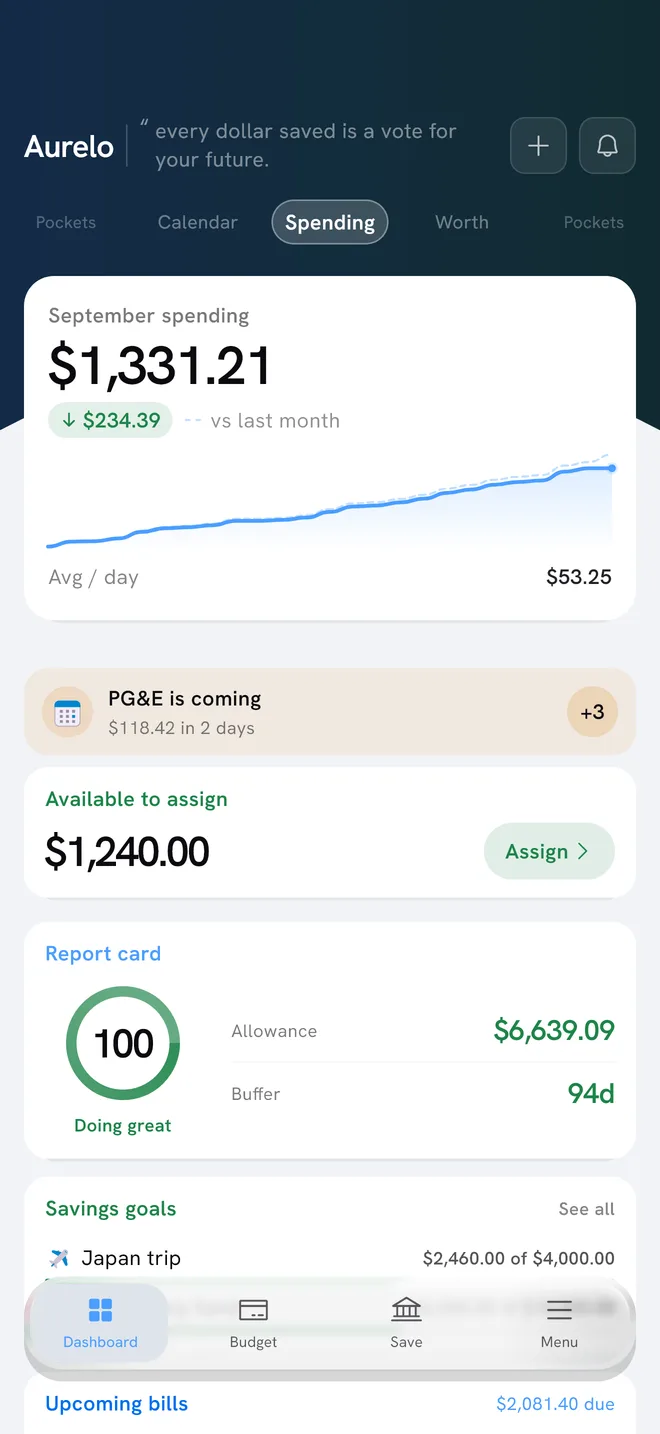
In Aurelo: Budget categories are called pockets, and they are grouped as Bills, Needs and Wants. There are also special pocket types: Annual Pockets for yearly costs, debt pockets for loans you want to track, and a Subscriptions pocket that groups recurring subscription charges. Each pocket shows what is left: what you put in, minus what you spent.
Building your own list
- Look at the last two or three months of statements. Note every type of spending you see.
- Group it. Bills, needs, wants, yearly, savings, debt.
- Name categories the way you think. “Kid stuff” is fine if that is how you think of it.
- Put a number on each. Start with what you actually spent, then adjust. How to make a budget walks through setting amounts.
In Aurelo: If you connect your bank, Aurelo reads your last six months of transactions, sorts them, and suggests a set of pockets with amounts that match how you actually spend. You can rename, remove or add any pocket. If you would rather skip the bank, you can pick pockets yourself and log spending by hand.
Start with fewer
The best category list is the one you will keep using. Start simple, live with it for a month, and adjust. A budget that tracks 15 honest categories beats one with 60 you stopped updating in week two.
Common questions
What are the main budget categories?
A practical set is housing, utilities, transportation, groceries, insurance, health, debt payments, savings, personal spending and entertainment, plus a place for yearly bills. Grouping them into bills, needs and wants makes it clear what gets paid first.
How many budget categories should I have?
Enough to see where money goes, few enough to maintain. Many people land between 12 and 20. If you never look at a category or it rarely has spending, merge it into a neighbor.
What is the difference between a need and a want in a budget?
A need keeps your life running safely: shelter, basic food, getting to work, required insurance, minimum debt payments. A want is everything that makes life better but could pause in a hard month. Many items have both parts, like groceries versus takeout.
Should savings be a budget category?
Yes. Treating savings as a line in the plan, funded when you are paid, makes it far more likely to happen than saving whatever is left at the end of the month.
Sources
- Consumer Expenditures — 2024 , U.S. Bureau of Labor Statistics, 2025
- Economic Well-Being of U.S. Households in 2025: Savings and Investments , Federal Reserve Board, 2026
Written by the Aurelo team. We build Aurelo, a budgeting app that reads your accounts read-only and never moves your money. Every claim about the app is checked against the app itself, and every figure links to its source. This is general education, not financial, tax or legal advice.