Key takeaways
- Stop the balance growing first, or every payment is refilling the same hole.
- Minimum payments are built to stretch the debt out, often for many years.
- A fixed monthly payment above the minimum is the single biggest lever you control.
- A small cash cushion keeps the next surprise from going straight back on the card.
Credit card debt is common, and it’s not a character flaw. A job gap, a medical bill or a few tight months can build a balance faster than most people expect, and high interest makes it slow to shrink. The good news is that the way out is simple to describe, even if it takes patience.
This plan has six steps. The first two stop the problem getting bigger. The next three shrink it. The last one keeps it from coming back.
This is general education, not personal financial advice.
Step 1: Get every balance in one place
Pull up each card and write down four things:
| Card (example) | Balance | Interest rate (APR) | Minimum payment | Due date |
|---|---|---|---|---|
| Card A | $3,200 | 24% | $105 | 12th |
| Card B | $1,800 | 21% | $55 | 26th |
It’s uncomfortable, but a list turns a vague worry into a specific amount. Your statement shows the APR, and most statements also include a box estimating how long minimum-only payments would take. That box is worth reading once.
For a sense of scale, the Federal Reserve’s consumer credit data puts the average interest rate on credit card accounts that were assessed interest at 22.15 percent for the second quarter of 2026.1 If your rates are in that range, interest is doing a lot of work against you every month.
Step 2: Stop the balance growing
Paying down a card while still adding to it is like bailing a boat with the drain open. Before you think about payoff speed, make sure new spending isn’t landing on the balance you’re trying to clear.
There are two common ways to do this:
- Move day-to-day spending to debit or cash while you pay the balance down.
- Keep using the card, but only for money you’ve already budgeted, and pay those new charges in full each month so they never join the old balance.
The second route takes more discipline, but it works well if you track it. Budgeting with credit cards explains how to set aside the money for each purchase as you make it.
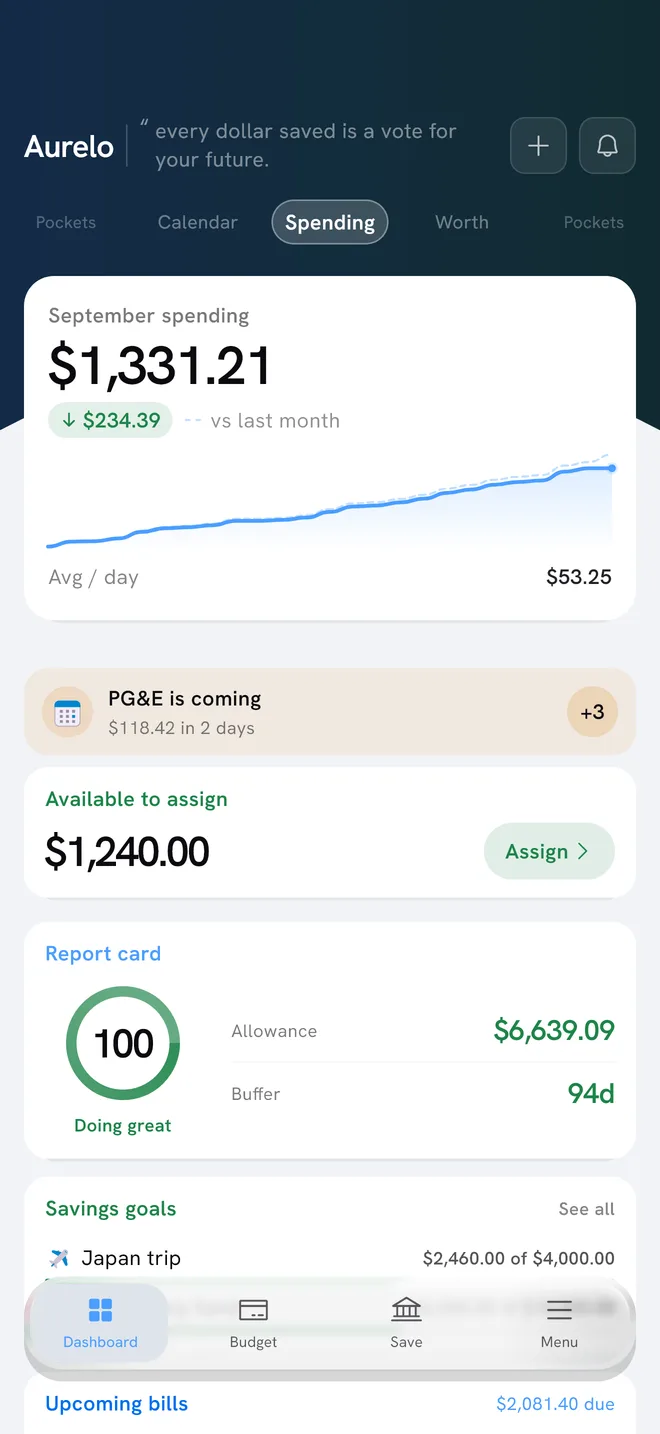
In Aurelo: Card Cover handles this for you in the budget. When you buy something on a credit card, the money comes out of the pocket it belongs to and is set aside to pay that card, so the new charges are already covered when the bill arrives. Paying the card shows as a transfer, not new spending, so nothing is counted twice.
Step 3: See what the minimum really costs
Card minimums are usually small on purpose. In the CFPB’s 2025 review of issuers’ card agreements, most issuers set the minimum at about 1 percent of the balance, plus interest and fees, with a dollar floor that was most commonly $40.2 At a high interest rate, that formula keeps the payment close to the interest charge, so the balance falls very slowly.
Here’s an example: a $5,000 balance at 22% APR, with no new charges. The first month’s interest alone is about $92.
| Monthly payment (example) | Time to pay off | Total interest (approx.) |
|---|---|---|
| Minimum only (1% + interest, $40 floor) | About 15 years | About $7,460 |
| Fixed $150 | About 4.3 years | About $2,800 |
| Fixed $250 | About 2.2 years | About $1,290 |
| Fixed $400 | About 1.3 years | About $730 |
The jump from minimum-only to a fixed $150 is the biggest single change in the table. A fixed payment doesn’t shrink as the balance shrinks, so more and more of it goes to the balance itself.
You’re not alone if you’ve been paying only the minimum. In 2024, about 15 percent of general purpose cardholders did, according to the same CFPB report, the highest share since at least 2015.2
Step 4: Choose a fixed monthly payment
Pick one number you’ll pay toward your cards every month, in total, and treat it like rent: a bill, not a hope.
To find it:
- Start from your take-home pay.
- Subtract fixed bills (housing, utilities, insurance, other loan payments).
- Subtract a realistic amount for groceries, transport and other needs.
- Decide how much of what’s left can go to the cards. Leave a little room for normal life, or the plan will break the first time something comes up.
If there’s nothing left after step 3, the issue is the budget before it’s the debt. How to make a budget and living paycheck to paycheck are good places to start.
Step 5: Pick an order for the extra money
With more than one card, pay every minimum and send the extra to one card at a time. There are two classic orders:
- Highest interest rate first (the avalanche). Usually costs the least interest.
- Smallest balance first (the snowball). Clears a card sooner, which many people find motivating.
When a card is paid off, roll its whole payment into the next one. Debt snowball vs avalanche works through both orders with the same debts so you can see the difference.
Other tools, with their catches
A few options come up often. None is right for everyone, and each has conditions worth reading closely.
Call your card issuer. Some issuers will lower a rate or offer a hardship program, especially if you’ve paid on time. It costs nothing to ask. Get any change confirmed in writing.
Balance transfer. Some cards offer a low or zero promotional rate on balances moved from other cards. Before you consider one, check:
- The transfer fee, often a percentage of the amount moved, added to the new balance.
- How long the promotion lasts, and whether your fixed payment clears the balance before it ends.
- The rate afterwards, which applies to whatever is left.
- Whether new purchases get the promotional rate. Often they don’t.
A transfer only helps if you also stop the balance growing (Step 2). Otherwise it can leave you with two card balances instead of one.
Debt consolidation loan. A fixed-rate loan that pays off the cards can simplify things and sometimes lower the rate. The same caution applies: the cards are now empty, and refilling them puts you further behind.
Nonprofit credit counseling. If the debt feels unmanageable, a reputable nonprofit credit counselor can review your situation and may offer a debt management plan. Be wary of anyone who charges large upfront fees or promises to make debt disappear.
Step 6: Keep it from coming back
Once a card is at zero, the goal is to keep it there.
Build a small cushion. The most common reason a paid-down card fills back up is a surprise expense with no cash behind it. In the Federal Reserve’s survey of 2025, 63 percent of adults said they would cover a $400 emergency expense using cash or its equivalent. Among the rest, the most common approach was to put it on a credit card and carry a balance.3 Even a few hundred dollars set aside changes that. How big your emergency fund should be covers sizing it.
Plan for the predictable surprises. Car repairs, annual insurance and holiday spending feel like emergencies but come every year. Setting a bit aside monthly, in a sinking fund, keeps them off the card.
Keep the payment going. When the last card hits zero, you already have a habit of sending a fixed amount somewhere every month. Pointing that same amount at savings is one of the easiest ways to build the cushion.
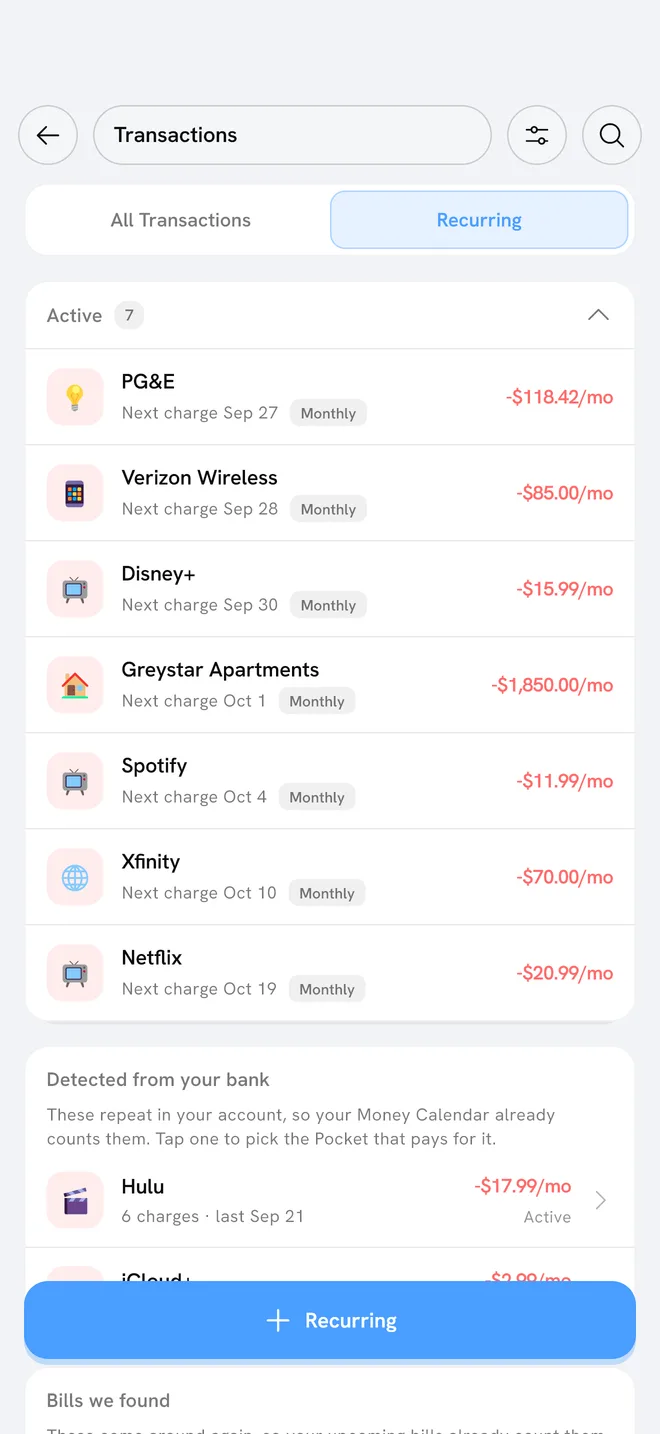
In Aurelo: Aurelo detects recurring bills from your transactions and shows what’s due and when, so a regular card payment sits alongside rent and utilities instead of catching you off guard. It only shows a bill it’s confident about. If you want to track a balance you’re paying down, you can keep it in a debt pocket, and on Gold the Payoff Plan shows the date you’re on track to be debt-free.
The short version
- List every card: balance, APR, minimum, due date.
- Stop new charges from joining the balance.
- Pay a fixed amount above the minimum, every month.
- Aim the extra at one card at a time, and roll payments forward.
- Read the fine print on transfers and loans before using them.
- Build a small cushion so the next surprise doesn’t undo your progress.
Common questions
What is the fastest way to pay off credit card debt?
Pay as much above the minimum as your budget allows, every month, and stop new charges from adding to the balance. Aiming the extra at the highest-rate card first usually costs the least interest.
Why does my credit card balance barely go down?
When the balance is high and the rate is around 20 percent or more, a large part of each minimum payment goes to interest. Only what's left reduces the balance, which is why minimum-only repayment can take many years.
Is a balance transfer a good idea?
It can help if the fee and the promotional period work out in your favor and you can clear the balance before the promotion ends. Check the transfer fee, the length of the promotion, the rate afterwards, and whether new purchases get the same rate.
Should I close my credit cards after paying them off?
It depends on your situation. Some people keep an old card open and unused, others close cards to remove temptation. Closing an account can affect your credit utilization and history, so read your card's terms and weigh what matters most to you.
Sources
- Consumer Credit – G.19 , Federal Reserve Board, 2026
- Consumer Credit Card Market Report, 2025 , Consumer Financial Protection Bureau, 2025
- Economic Well-Being of U.S. Households in 2025: Savings and Investments , Federal Reserve Board, 2026
Written by the Aurelo team. We build Aurelo, a budgeting app that reads your accounts read-only and never moves your money. Every claim about the app is checked against the app itself, and every figure links to its source. This is general education, not financial, tax or legal advice.